Tag: Fiber channel

  • Why is Fiber Channel Important for Data Transmission?

    Data is the heartbeat of every modern business. Files, emails, videos, and apps all depend on data moving fast and safely. When data travels between servers and storage, the network must be steady, quick, and secure. 

    Fiber Channel helps make that happen. It is a high‑speed networking technology used mostly in data centers to connect servers to shared storage. 

    Unlike regular Ethernet, Fiber Channel is built for storage traffic, so it stays reliable even when workloads get heavy. As companies store more information and expect systems to run 24/7, dependable data transmission becomes even more important. 

    But is Fiber Channel really that important for data transmission? To answer that, here are six reasons why Fiber Channel still matters today.

    1. High Speed for Heavy Data Loads

    Fiber Channel is known for pure speed. Storage traffic can get massive, especially when databases, virtual machines, and backups run together. It handles this pressure without slowing down because it uses a dedicated path for storage instead of sharing space with regular network traffic. Modern Fiber Channel links also come in very fast speeds (like 32G, 64G, and higher), so they can keep up with all‑flash storage and NVMe workloads. 

    Why speed matters here:

    • Handles large transfers smoothly: Databases, virtualization, backups, and file sharing can send massive amounts of data. Fiber Channel keeps data moving without choking the network.
    • Supports modern high bandwidth: Newer Fiber Channel standards deliver very high throughput and keep getting faster as technology improves.
    • Scales without bottlenecks: When you add more storage or servers, Fiber Channel can expand to meet the load.

    Because of this, servers can read and write data quickly, and teams avoid delays that build up over time. This extra speed becomes even more valuable when companies use data‑hungry tools like AI, real‑time analytics, and high‑resolution video processing.

    2. Low Latency for Real‑Time Access

    Speed is not only about how much data moves per second. It is also about latency, or how long data takes to reach its destination. Fiber Channel keeps this delay extremely low.

    Low latency helps because:

    • Apps respond faster: Systems like online payments, live hospital records, and stock trading platforms need instant access.
    • Performance stays predictable: Fiber Channel uses dedicated paths, so traffic doesn’t wander or get stuck behind other network tasks.
    • Virtualization runs better: When many virtual machines share the same storage, low latency prevents slowdowns and lag.

    Even a small delay can hurt user experience or system accuracy. Fiber Channel reduces those delays and keeps data access smooth.

    3. Reliable and Lossless Transmission

    In storage systems, dropped data packets are a big problem. If packets get lost, systems must resend them, which wastes time and can cause errors. Fiber Channel avoids this with a lossless design.

    Key reliability benefits:

    • Strong flow control: The network manages traffic so devices don’t overwhelm each other.
    • Built‑in error checks: Data gets verified during transfer, so errors are caught early.
    • Dedicated storage environment: Because Fiber Channel SANs are not mixed with daily office traffic, they face fewer collisions and less congestion.

    For businesses, this means fewer outages, smooth backups, and safer handling of mission‑critical files.

    4. Strong Security through Isolation

    Security is another reason Fiber Channel remains popular. A Fiber Channel SAN (Storage Area Network) usually sits apart from the main corporate LAN. This physical and logical separation strengthens protection.

    What isolation gives you:

    • Harder access for attackers: Even if someone enters the office network, they can’t easily jump into storage traffic.
    • Fewer chances of ransomware spread: Storage stays on a separate path, reducing exposure.

    Fiber Channel also supports zoning, which works like creating secure “rooms” inside the SAN:

    • Only approved servers can reach specific storage devices.
    • Access rules stay clear and controlled.

    This lowers the risk of leaks, misuse, and accidental access by internal users.

    5. Scales Well as Businesses Grow

    Data requirements rarely stay the same. Most companies add apps, users, and storage every year. Fiber Channel is built for steady growth, so you don’t need to rebuild the network each time demand rises.

    Why it scales well:

    • Easy expansion: Add new switches, ports, or storage arrays without breaking the fabric.
    • Stable performance at size: Large topologies keep working smoothly even when many devices join.
    • Long‑term planning: Teams can grow capacity step by step instead of doing expensive redesigns.

    This makes Fiber Channel a strong choice for organizations that expect storage demand to keep climbing.

    6. Optimized for Storage Traffic

    Fiber Channel was created for one job: moving storage data. Because it is purpose‑built, it performs better for SAN workloads than general networks.

    Storage optimization shows up in a few ways:

    • Protocols tuned for block data: Fiber Channel uses FCP (Fiber Channel Protocol), designed to move storage blocks efficiently.
    • Better for key tasks: It supports fast database reads, VM migrations, and disaster‑recovery replication.
    • Lower CPU overhead: Dedicated host bus adapters (HBAs) handle much of the processing, freeing server CPUs for real work.

    The result is smooth, efficient data transmission with stable performance and fewer wasted system resources.

    Conclusion

    Fast and safe data transmission is no longer optional as it powers daily business. Fiber Channel remains important because it was built for storage from the ground up. It delivers high speed, very low latency, and reliable, lossless transfers even during peak loads. 

    Its separate design improves security, while zoning adds tight control over access. Fiber Channel also scales smoothly, letting data centers grow without constant redesign. 

    And since it is optimized for storage traffic, it keeps performance steady and predictable in ways general networks often can’t match. For organizations that rely on always‑available data, Fiber Channel is still one of the most trusted ways to move information where it needs to go.
  • 7 Common Storage Challenges Solved by Fiber Channel

    People and companies store more data every day. By 2025, it is anticipated that the total amount of data stored worldwide will surpass 200 zettabytes, and this figure will continue to rise.

    This massive amount of data creates lots of issues. Devices get slower. Files get misplaced. Systems get crashed when they are needed most.

    Most users find it challenging to resolve these issues. The fact is that most storage systems are not up to this level of work. They might be too sluggish, fail too frequently, or not support many users concurrently. But there is an answer that has assisted countless people. This answer is known as Fiber Channel.

    Fiber Channel provides a quicker, safer method of transferring and storing information. It also prevents frequent issues before they become larger.

    Keep reading to learn seven storage issues that Fiber Channel can solve. 

    1. Tackling Slow Data Transfer

    One of the largest challenges with storage networks is slow-moving data. Applications require data at high speed in order to operate well. Any slowdown impacts business processes. Fiber Channel addresses this by offering guaranteed high-speed transfers. It offers blazingly quick data transfer rates of 16, 32, or 64 Gbps. It’s a lot faster than the majority of standard systems.

    Why Speed Matters

    Quicker data access enables teams to work with zero interruptions. It optimizes application response and minimizes wait time. For companies with databases or AI workloads, each second matters. It makes sure data moves rapidly and without delays.

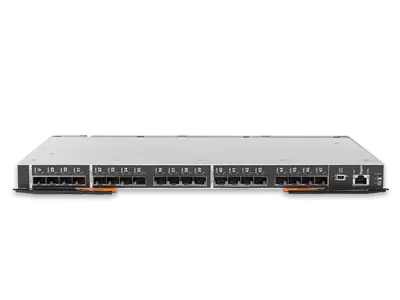
    Flex System FC5022 16/8Gb SAN Scalable Switch

    Major benefits:

    • Transfers data with high speed.
    • Optimizes application response time.
    • Handles intensive workloads such as AI and analytics.

    2. Solving Downtime Issues

    Downtime for storage networks can bring key services to a standstill. Time and money are wasted when systems crash. Fiber Channel avoids this risk with a model designed for stability.

    Why It Keeps Systems Running

    It is built to support redundancy. Should one path fail, it automatically shifts to another path. This prevents system crashes and maintains storage at all times. Such reliability is important to sectors like healthcare or finance, where downtime is costly.

    • Protects vital operations from downtime.
    • Ensures business continuity.
    • Reduces losses should the system fail.

    3. Handling Growing Data Volumes

    Information keeps increasing on a daily basis. Traditional systems typically cannot handle high loads. Fiber Channel offers scalability, which makes it easy to handle big loads.

    Scaling with Business Needs

    Firms can expand their storage without compromising performance. This network scales nicely. This avoids companies from suffering from disruptions when they add new workloads or add capacity.

    4. Reducing Network Congestion

    Most storage networks suffer from congestion. When devices are accessing storage at the same time, congestion takes place. Fiber Channel corrects this by separating storage traffic from all other forms of traffic.

    The Advantage of Isolation

    The setup offers clean and uninterrupted data movement. It prevents delays that could slow down applications. With a dedicated path for storage, companies enjoy better performance in their systems.

    • Without hesitation, it operates around the clock.
    • Delivers pressure consistently.
    • Keeps data safe during power outages.

    5. Improving Data Transfer Security

    Security is paramount in businesses. Information must be protected while crossing networks. Fiber Channel provides options for security that shield sensitive data.

    Secure Fiber Channel Transfers

    It uses zoning and encryption to provide data protection. Zoning controls who sees a given section of the network. Encryption preserves information confidentiality. These methods protect against both external and internal threats.

    6. Making Storage Management Simple

    Complexity is an issue of storage as well. Old networks take high-end manual efforts for configuration and administration. Fiber Channel avoids complexity through its systematic approach.

    Why Simple Management Helps IT Teams

    IT personnel save time with well-defined procedures and tools. They are able to focus on performance optimization instead of fixing errors. These networks also provide central control, reducing confusion.

    7. Support for High-Performance Applications

    Today’s companies employ applications that require peak performance. From workloads in the cloud to analytics, these applications require robust storage support. Fiber Channel provides high performance and low latency to satisfy these requirements.

    Future-Ready Performance

    It guarantees that performance does not decrease even with heavy usage. This makes it a viable option for companies gearing up for AI or big data initiatives. This network remains to handle modern applications unaltered.

    Why enterprises benefit:

    • Gives consistent throughput for high loads.
    • Offers low latency for real-time applications.
    • Maintains robust performance when under maximum utilization.

    In The End

    Storage problems waste time, money, and peace of mind. They cause delays and stress. But there is a smart way to solve them. This network is the smart way. It helps stop the most common issues before they become major trouble.

    It speeds things up. It keeps data safe. It supports big teams. It grows with your needs. It protects your files and helps your apps work better.

    By solving these common storage challenges, Fibre Channel has become a trusted choice for many teams across the world. It gives people the freedom to focus on their work, not their storage issues.

    A better storage system is not a dream. It is a choice. Fiber channel helps make that choice easy

  • 6 Reasons to Upgrade to 16 GB Fiber Channel Connectivity

    In 2025, over 463 exabytes of data will be created daily worldwide, all the data produced in the last hundred years. 

    Companies share files, launch apps, save movies, and operate sites every second. To make all this happen quickly and smoothly, they require robust networks. Fiber Channel is one of the most reliable methods of transmitting data. It links servers to storage systems in large firms.

    Fiber Channel works like a fast train that never slows down. Many businesses now use 8 GB Fiber Channel. But now it’s time for an upgrade. 16 GB Fiber Channel is here, and it is much better. It moves faster, works harder, and handles more data. 

    Read on to learn six clear reasons why switching to 16 GB Fiber Channel is a smart choice.

    1. Double the Speed Means Less Waiting

    Let us begin with the largest one. 16 GB Fiber Channel is faster than 8 GB by half. It transfers at 16 gigabits per second. That implies files, videos and programs load quicker. Everyone completes their work without delay.

    When a firm goes to 16 GB, processes that took 10 seconds now consume 5. In large companies, seconds matter. Quick speed enables individuals to complete tasks quickly. This also makes the users more content.

    Speed Supports During Busy Periods

    When large numbers of individuals access the system concurrently, speed matters more. At peak times, 16 GB keeps things running. It does not bog down. It processes more work simultaneously. That equates to no slowdowns and no system crashes.

    2. More Suitable for New Applications and Systems

    New apps require more data, and new systems require superior performance. 8 GB Fiber Channel is not up to large workloads, but 16 GB finds them a breeze.

    Companies use large video files, large databases, and real-time systems, which require quicker data transfer. 16 GB accommodates all of these and ensures new tools perform smoothly without glitches or lag.

    Also, the new storage systems will arrive 16 GB ready. With old Fiber Channel, you’ll be missing out on what today’s storage is capable of. An upgrade maximizes today’s technology.

    3. More Secure and Intelligent Connections

    16 GB Fiber Channel is not only fast but also intelligent and robust. It employs better chips and enhanced error checking, keeping the network robust and minimizing the likelihood of errors when transmitting data.

    This is a huge factor in companies where information needs to remain secure. One small mistake in a document can create enormous issues. With 16 GB, you have cleaner and more secure data flow.

    Keeps Data Safe and Clean

    16 GB checks data while it transfers it. If it detects something amiss, it can repair it immediately. This ensures files are not broken and protects against malicious attacks. Most systems today also have built-in protection that functions optimally with 16 GB Fiber Channel.

    4. Saves Space and Power

    16 GB Fiber Channel can transmit more data over fewer cables, which translates into fewer pieces of hardware and wires. With fewer pieces, the system occupies less space and consumes less power.

    Less power translates into lower energy costs and less heat, which makes servers and storage last longer. With fewer issues and pieces to deal with, IT work becomes simpler, too.

    • Needs fewer switches and cables.
    • Saves energy costs.
    • Reduces cooling requirements.
    • Makes systems simpler to manage.

    5. Simple to Upgrade and Future-Proofed

    If your company expands, your network needs to grow as well. 16 GB Fiber Channel is designed for future expansion. You can add more users, storage, and servers without diluting anything.

    The good news is that 16 GB is also compatible with older environments. You don’t need to alter everything at the same time; you can update one component at a time, making the transition easy and hassle-free.

    It also accommodates newer technologies such as virtualization and cloud storage, which save money and enhance performance. 16 GB Fiber Channel enables them to perform optimally.

    6. Provides a Better Experience for Everyone

    Fast and smooth systems benefit everyone. When things simply work, employees have less stress. Visitors remain satisfied when websites load rapidly. Administrators feel secure when data is protected and systems remain robust.

    This is how 16 GB benefits various individuals:

    • IT staff resolve issues quickly.
    • Users experience quick and smooth service.
    • Customers have improved websites and apps.
    • Owners save money with less breakage.

    Keeps You Ahead of Others

    Companies that switch to 16 GB remain ahead of the competition. They receive faster machines, enhanced security, and more expansion opportunities. Others who stay behind with outdated technology lag behind. Speed and security count in today’s fast-paced world. 16 GB Fiber Channel keeps companies prepared for anything.

    Wrapping It Up the Smart Way

    There isn’t a moment to lose in the busy world today. Data must travel quickly. Systems must remain robust. Businesses require networks that won’t hold them back. That’s what 16 GB Fiber Channel provides.

    It introduces twice the speed, more intelligent protection, and improved support for emerging tools. It saves money by taking up less space and consuming less power. It enables teams to accomplish more in less time. It makes businesses robust today and prepared for tomorrow.

    So if you want your systems to be faster and smarter, upgrade to 16 GB Fiber Channel. It’s not a small step. It’s a giant leap forward for storage and speed.